 By peter_lzh
 How TuringEval-X Moves AI From “Demo Capability” to “Taking Responsibility” in Commodity Appraisal
WAIC 2026 just wrapped up in Shanghai. Honestly, what impressed me most this year was not whose parameters doubled again, but that AI is shifting from “demonstrating capability” toward “taking responsibility.”
At the conference, Turing ShenShi (Turing Deep Vision) released TuringEval-X, an all-category commodity appraisal model that identifies styles, authenticates真伪, grades condition, detects flaws, and estimates prices in one pipeline. I studied its technical architecture and found this is not a general model wrapped in an industry shell, but a deliberate split of “understanding” and “discrimination” into two cooperative layers.

The Old Problem With Vertical AI
The most common approach to building a vertical AI product is a general model plus an industry prompt plus RAG. Knowledge is patched in through retrieval, and discrimination relies on the model organizing language itself. This path solves “understanding,” but discrimination accuracy stalls.
The reason is simple: a large model’s training objective is essentially language organization, not feature comparison. Whether a bag’s embossed outline is sharp enough, or whether a skincare product’s batch-code rules hold up, calls for millimeter-level visual discrimination that semantic reasoning cannot help with.
TuringEval-X’s answer is the LLM-EDC architecture, splitting understanding and discrimination into two cooperating layers:
- The LLM acts as commander, reading user intent and image content, planning the appraisal flow, deciding which parts of a category to inspect, then dynamically routing tasks via MoE to the corresponding specialist discrimination models.
- The discrimination models do the work, each handling its sub-task, making fine-grained judgments on the key regions the LLM specified.
- Finally, the LLM aggregates the discrimination results into a human-readable appraisal explanation.
General models understand well but discriminate coarsely; specialist models discriminate precisely but cannot plan or explain. Since each has a shortcoming, build them separately and let each do its job.
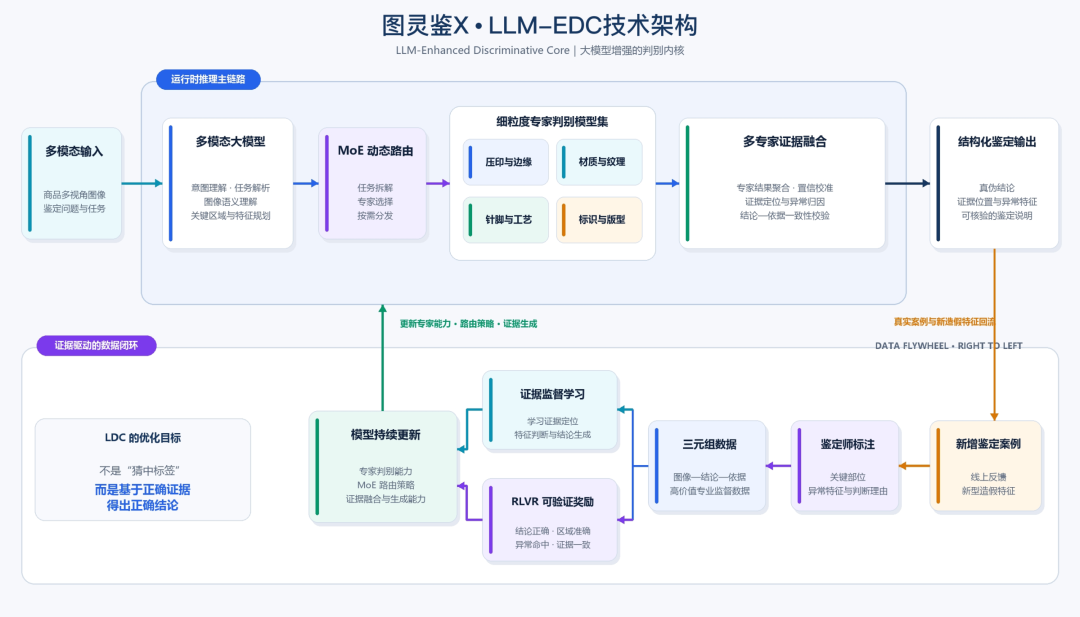
This thinking has a lineage: BAIR argued for Compound AI Systems last year, showing multi-component systems reliably beat single-model calls on reliability and accuracy. TuringEval-X applies that architectural idea to the concrete scenario of commodity appraisal.
Training Data Plays Differently
Traditional discrimination models train on binary tuples: image plus label, genuine or fake. The model learns only “see this kind of image, output this label,” accountable only for the conclusion.
TuringEval-X switches to triplets. Besides the image and the judgment, each datum also carries the appraiser’s part-by-part rationale. When labeling, the appraiser does not just write “not authentic,” but also “the embossed letter outline is blurry and defocused, whereas genuine items have even depth and sharp outlines.” Rationale and result enter training together, not as an afterthought note.
The optimization objective changes entirely. The model no longer wins by guessing the right label, but learns a complete chain: locate evidence, identify features, generate rationale, reach a conclusion. The output is not the bare words “genuine/fake” but a traceable reasoning process:
The embossed letter outline is blurry and defocused, which does not match the genuine craftsmanship standard of even depth and sharp outlines, so it is judged non-authentic.
The industry has talked for years about moving from model-centric to data-centric. TuringEval-X lands exactly on that point. From binary tuples to triplets, what is added is not data volume but data knowledge density.
RLVR: Reward Looks at Evidence, Not Preference
Ordinary RLHF rewards by human-preference voting, picking whichever output sounds more reasonable. In appraisal that is not enough: a plausibly worded rationale can be fabricated.
TuringEval-X introduces RLVR, verifiable-reward reinforcement learning. The reward logic shifts from “do humans like it” to “can each step be verified.” The appraiser’s professional judgment is broken into independent dimensions: is evidence localization accurate, is anomaly detection complete, does the evidence match the conclusion. Each dimension has its own reward signal, and that signal comes from appraisal experts, not generic annotators.
This follows the same vein as Process Reward Models, breaking the process into verifiable steps with per-step rewards. PRM has already proven process rewards beat outcome rewards in math and code reasoning; TuringEval-X ports the same logic into visual discrimination.
Worth mentioning is a closed loop: appraisers keep adding rationales, data flows back into training, the model iterates, fraud techniques escalate, and the data escalates with them. The flywheel spins.
Seven Categories, Each With Its Own Difficulty
Bags, shoes, apparel, cosmetics, coins, jewelry and jade, and food, seven categories all share the LLM-EDC foundation, yet their discrimination targets and pain points differ completely. A few interesting ones:
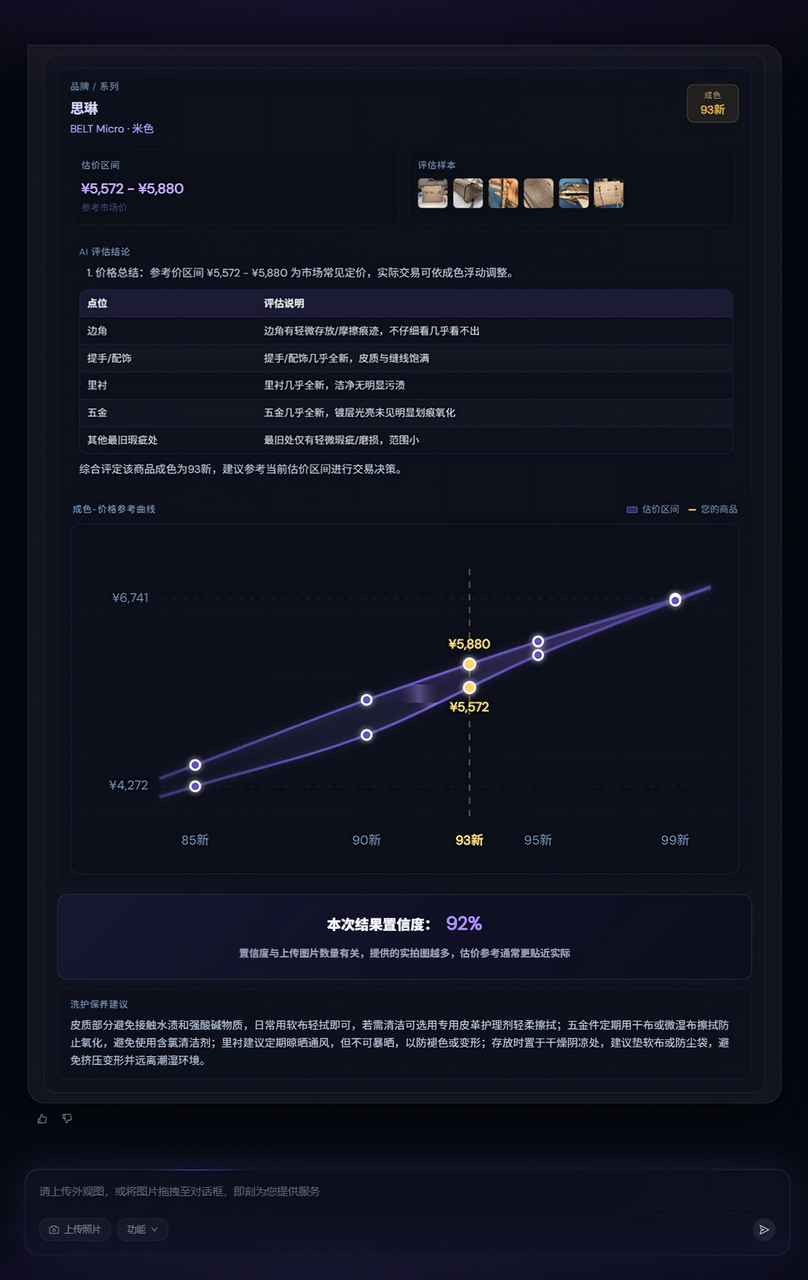
- Bags use explainable multimodal discrimination; cross-modal attention anchors the conclusion to specific visual regions with textual rationale. Condition grading and valuation are done too, quantifying condition first then giving a valuation range, not the lazy approach of averaging全网 prices.
- Cosmetics play font forensics: a high-resolution vision model cuts text to character and stroke level, comparing stroke skeletons, counter proportions, kerning, and ink spread into a set of “production fingerprints.”
- Coins are the most special; each is unique, so the model cannot memorize answers. Their approach has multiple experts judge the same image independently and converts label agreement and rationale agreement into reward signals, translating human experience into math the model understands.
- Porcelain suffers from large glaze-reflection differences under varying light. The fix is dynamically adjusting parameters at inference to adapt to new environments without touching core weights. o3 and DeepSeek R1 expand compute at inference through chains of thought; TuringEval-X does something similar visually, letting the model “think a bit longer” on site.
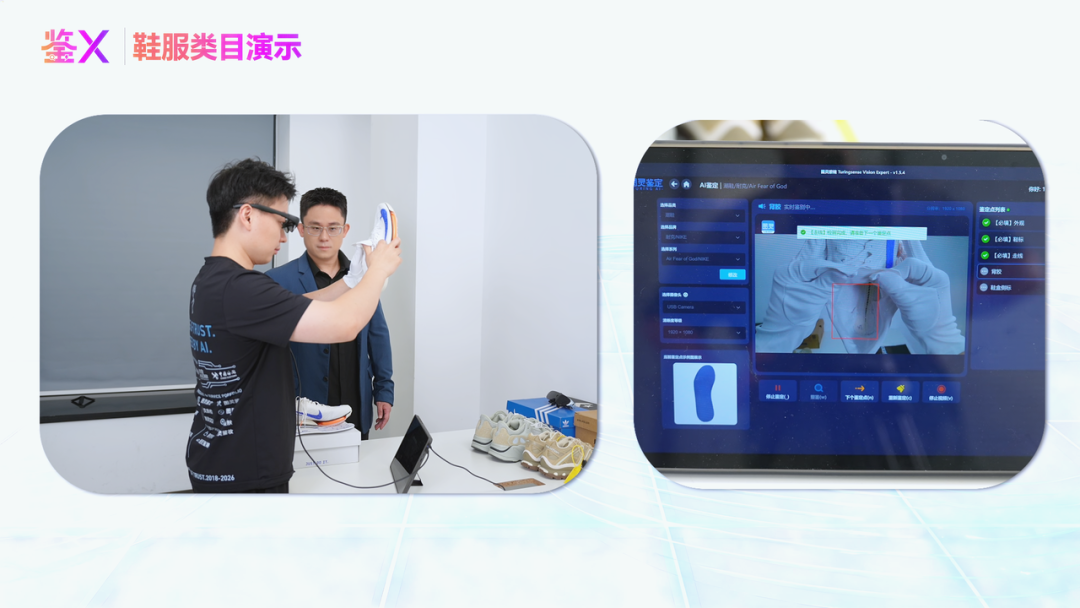
- Shoes use diffusion models to synthesically generate scarce counterfeit samples, incrementally adding recognition as new fraud appears, plus AR appraisal glasses that prompt key checkpoints in real time, freeing the hands.
- Apparel flaw detection and food retrieval against an authoritative database share the same core logic: orchestration layer plans, execution layer discriminates, process is traceable.
Why Trust It
No matter how good the tech sounds, in the end you look at the fundamentals.
Turing ShenShi is a Tsinghua-incubated team; founder Tang Pingzhong is a Tsinghua professor researching game theory and mechanism design, a background that fits appraisal perfectly. Game theory has a classic conclusion: a platform that truthfully reflects commodity information enables more transactions than one that tolerates false information. They did not pick this赛道 on a whim; in theory they are committed to returning commodity-trade information to truth.
Data accumulation is deep too: over 600 million commodity authenticity detail images, with cumulative appraisals exceeding 50 million. This kind of long-term professional data cannot be replicated by piling parameters into a general model.
At the industry level, they led the drafting of the “AI Appraisal” group standard, publicly described as the first of its kind nationally.
The most convincing is the real-world test:
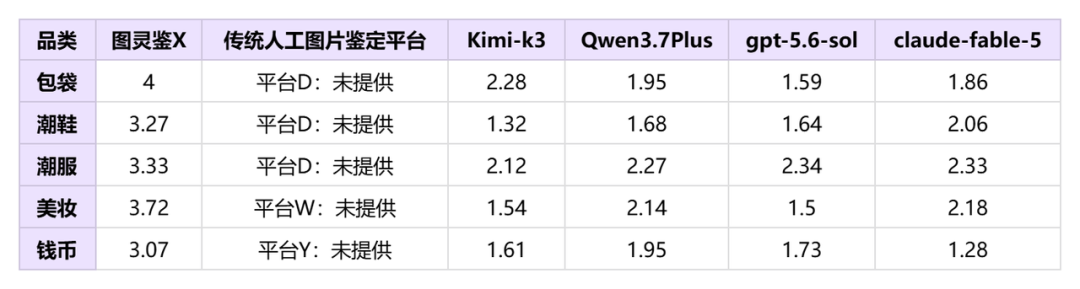
Machine Heart ran a 100-set random benchmark, sampled from nearly 48 hours of real orders at a physical appraisal center, configured 1:1 genuine-to-fake and confirmed by lab methods. Result: bags, sneakers, streetwear, and cosmetics were all correct; coins 95.5%. The average rationality of the rationale across five categories was 3.48/5, while the best-performing general model scored about 2.
Try It Yourself
To experience it, search WeChat for the mini program “图灵鉴X,” or open the web version at x.tulegit.com, register and log in to try basic appraisal for free.
If you have an idle bag or lipstick at home, snap two photos and upload them to see whether its rationale holds up, more intuitive than ten thousand words here.
Two Final Thoughts
TuringEval-X’s technical path actually answers an industry-hot question: after general models hit a ceiling, how do vertical scenarios land?
Its answer is fairly clear: do not let general models bear fine discrimination alone, decouple understanding from discrimination. Do not let the model be accountable only for conclusions, use triplets to make it accountable for rationale too. Reward not by human preference but by whether evidence is verifiable. Test not by brushing public leaderboards but by random sampling of real orders.
This thinking applies beyond appraisal. Medical imaging, industrial quality inspection, legal document review, any vertical scenario needing explainable, high-precision, verifiable results can borrow this decoupling playbook.
The decisive window for vertical data has already opened.