 By peter_lzh
 SenseNova-Vision: SenseTime Open-Sources a Unified Vision Model That Beats Vision Banana on Most Benchmarks
A few days ago, SenseTime officially released and fully open-sourced SenseNova-Vision, a unified vision foundation model for both understanding and generation — a major visual-capability upgrade in SenseTime’s SenseNova model family.
Until now, most “unified vision” offerings in the industry were really bundles of expert models — detection, segmentation, depth prediction — packaged together but fundamentally fragmented. SenseNova-Vision’s core breakthrough is different: it makes vision a native capability of a general-purpose foundation model. Classic vision tasks — object detection, image segmentation, depth prediction, 3D reconstruction — are all natively unified within one model.
GitHub: https://github.com/OpenSenseNova/SenseNova-Vision
This “native integration” delivers gains in both directions:
- Data feeding back: decades of high-quality vision data directly improve the base model’s visual understanding.
- Reasoning empowering vision: the LLM’s reasoning ability lets vision tasks cross-pollinate — you can even define brand-new vision tasks in natural language.
SenseTime has held the No. 1 market share in China’s vision AI market for ten consecutive years, and in 2025 topped the global market share in video analytics for the first time, along with the No. 1 share in Asia-Pacific. SenseNova-Vision folds this industry-leading vision expertise into a unified multimodal model — evolving from an “execution tool” into a “world-understanding model.”
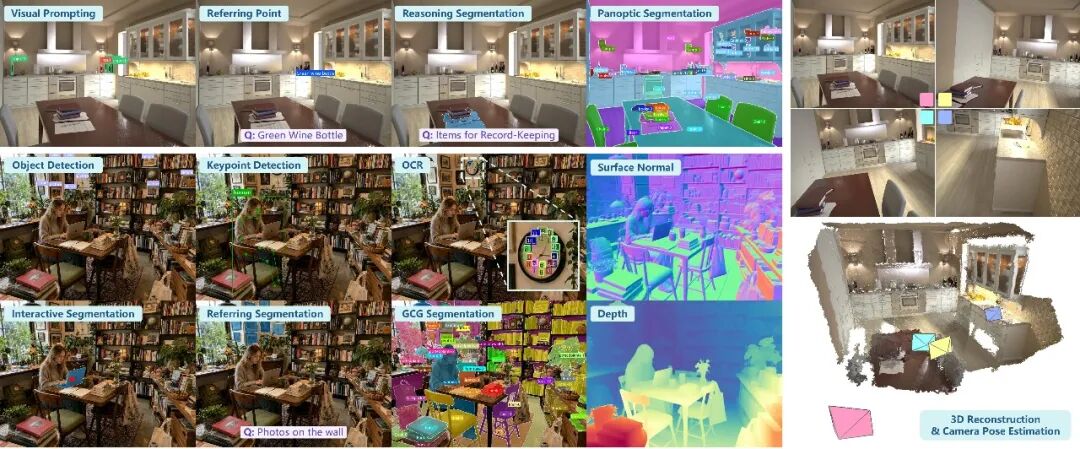
1. Real-World Stress Tests: “Visual Mind-Reading” Under Free-Form Instructions
Traditional vision models can only do their own narrow jobs, and they fall apart in complex, cluttered scenes. Thanks to the emergent intelligence of its natively unified foundation, SenseNova-Vision shows remarkable generalization even in extreme scenarios where human vision struggles.
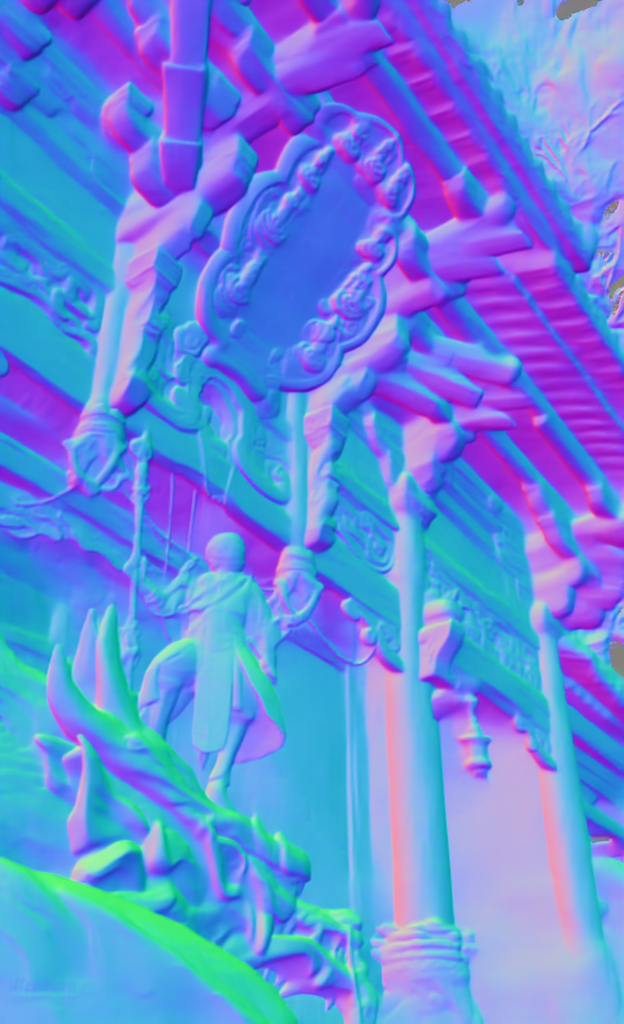
Zero-shot generalization: understanding an unseen game in one second
Facing game footage never seen in training, the model shows striking cross-domain adaptability. With language reasoning interwoven with native vision, it simultaneously handles surface-normal estimation, instance segmentation, and character keypoint detection — seamlessly and in fine detail, with zero task-specific retraining. Film, game, and digital content creators can drop it straight into their workflows.

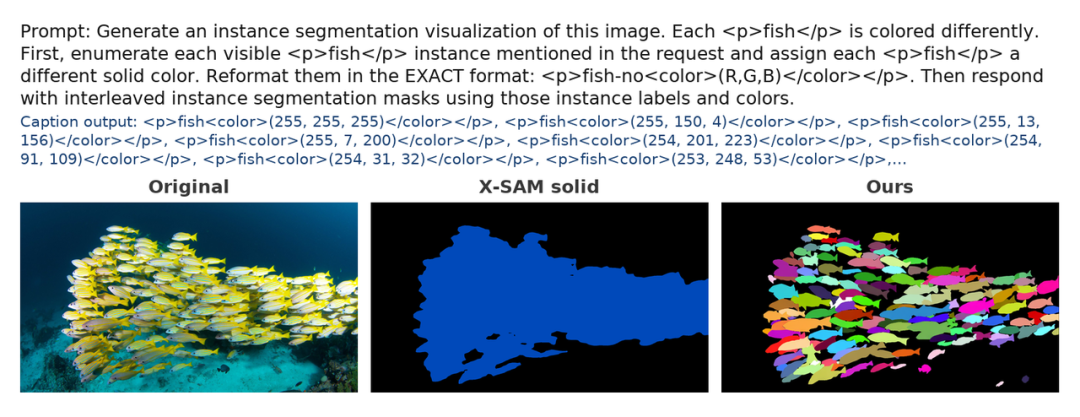
Ultra-dense object segmentation: separating overlapping fish one by one
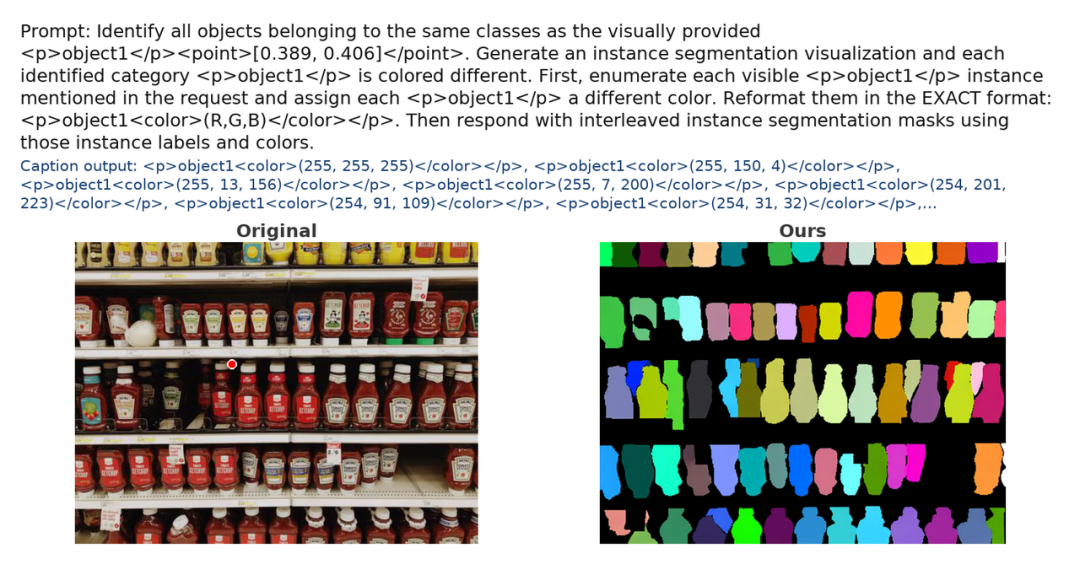
Given densely packed, heavily overlapping schools of fish, flocks of sheep, shelf products, or overhead views of vehicles, the model isolates each individual with surgical precision — even when colors are nearly identical and edges are deeply interwoven. This opens new solutions for industrial counting and smart warehousing.
Seeing through mirror reflections: recovering true spatial geometry
In complex indoor environments with mirrors and glass, traditional vision models are easily fooled by reflections. SenseNova-Vision automatically filters out the reflection trap and correctly estimates the true spatial orientation and depth relationships of mirrored objects — evidence of a deep grasp of 3D spatial geometry rather than surface appearances.


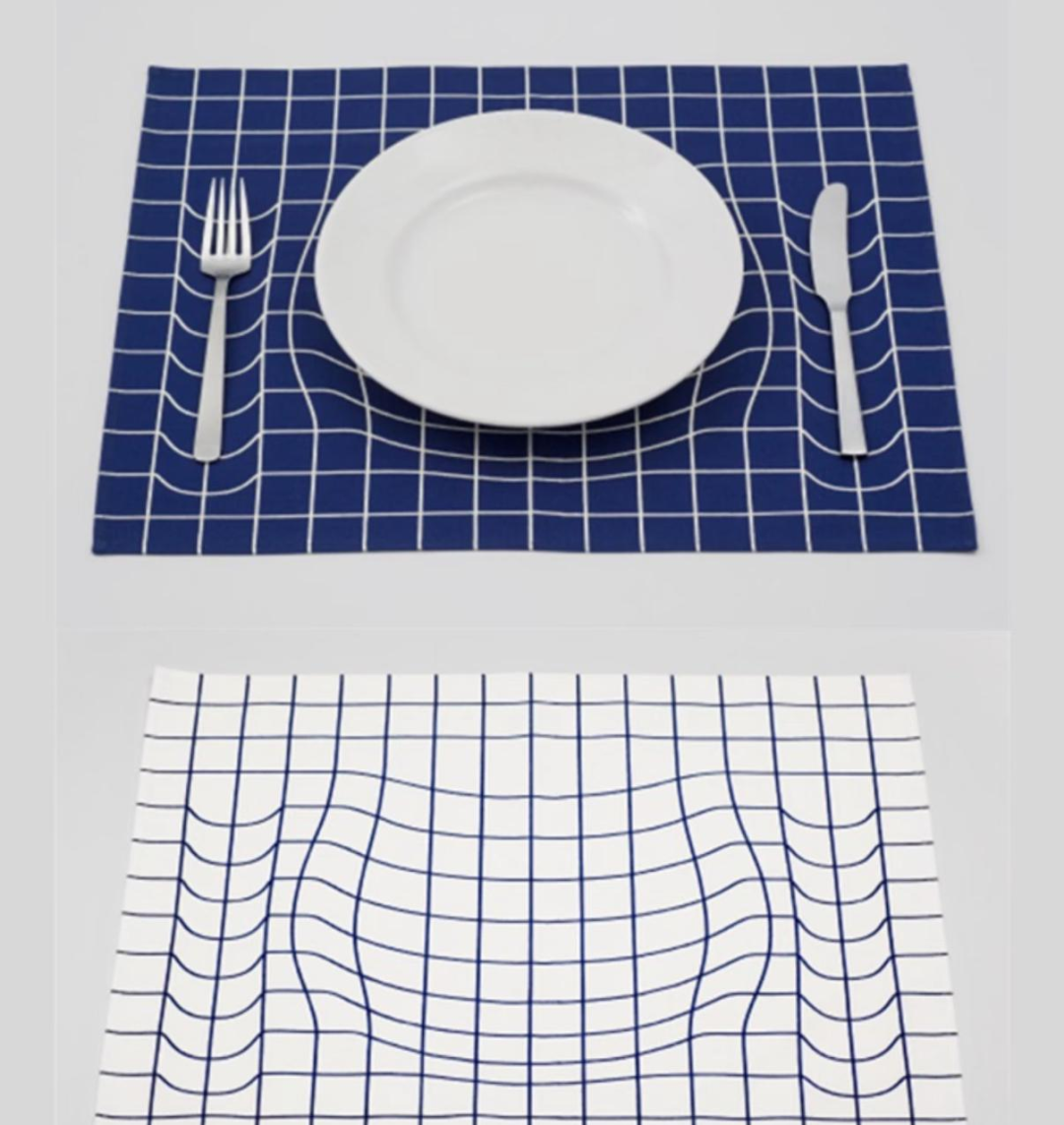
Beating optical illusions: perceiving spatial reality, not appearances
In images full of optical-illusion tricks (like classic forced-perspective photography), the model not only extracts the complete contours of occluded objects, it also outputs fully correct surface-normal estimates. Refusing to be tricked by patterns and perspective games is exactly what the fusion of language-model reasoning and dense geometric prediction looks like in practice.

2. Leading the Core Tasks: Matching Dedicated Expert Models with a Single Model
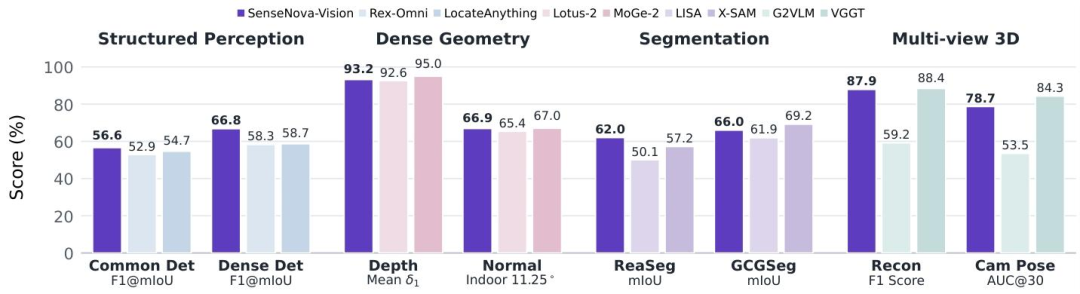
Folding vision tasks into general multimodal generation did not weaken specialized performance — cross-task knowledge sharing actually boosted it. Across authoritative benchmarks, SenseNova-Vision leads broadly in four core vision domains with a single model, matching or surpassing dedicated expert models:
- Structured visual understanding: leads comparable general models across object detection, referring detection, OCR, and keypoint localization — especially strong on dense small-object detection and long-tail category recognition.
- Dense geometry prediction: depth and surface-normal estimation reach the precision of dedicated geometry models, with high stability indoors and outdoors.
- Segmentation: spans generic, reasoning, and interactive segmentation. Its multimodal understanding makes reasoning segmentation and conversational (GCG) segmentation particularly impressive.
- Multi-view 3D geometry: a single model performs high-quality multi-view point-cloud reconstruction and camera pose estimation, leading among general-purpose vision approaches.
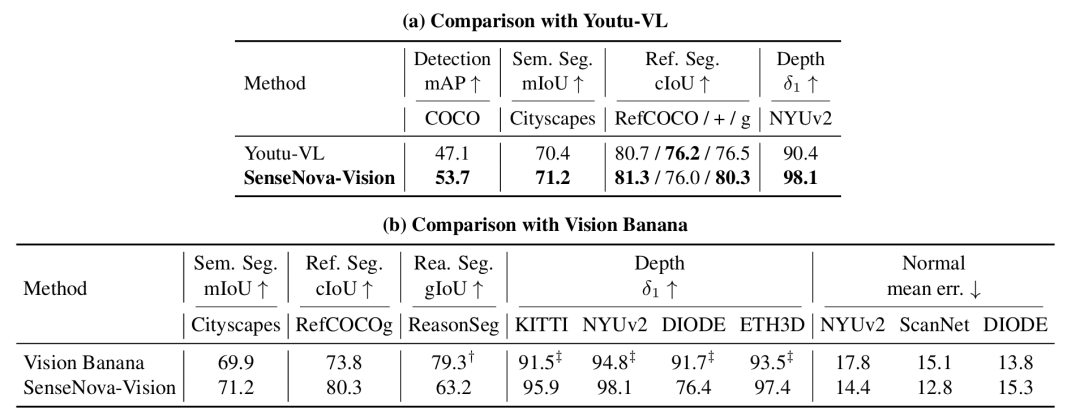
Head-to-head comparisons are decisive:
- Versus semantics-oriented models (e.g., Youtu-VL): SenseNova-Vision leads across detail-critical tasks like detection, segmentation, and depth.
- Versus generation-oriented models (e.g., Vision Banana): a generational advantage. (a) Core metrics surpassed — SenseNova-Vision beats Vision Banana on the vast majority of authoritative benchmark metrics. (b) Double the task coverage, fully open source — Vision Banana handles only two of the four core task areas, while SenseNova-Vision sweeps structured understanding, dense geometry, panoptic segmentation, and multi-view 3D all at once — and open-sources both models and data.
3. Rebuilding the Foundation: From Stitching to Native Unification
For years, vision AI evolved along a “one task, one model” path — each task an isolated island. SenseNova-Vision breaks this structural bottleneck: for the first time, all vision tasks are expressed as multimodal generation problems that a general foundation model can understand. No task-specific prediction heads — text, pixels, semantics, and geometric features are jointly modeled in one shared representation space.
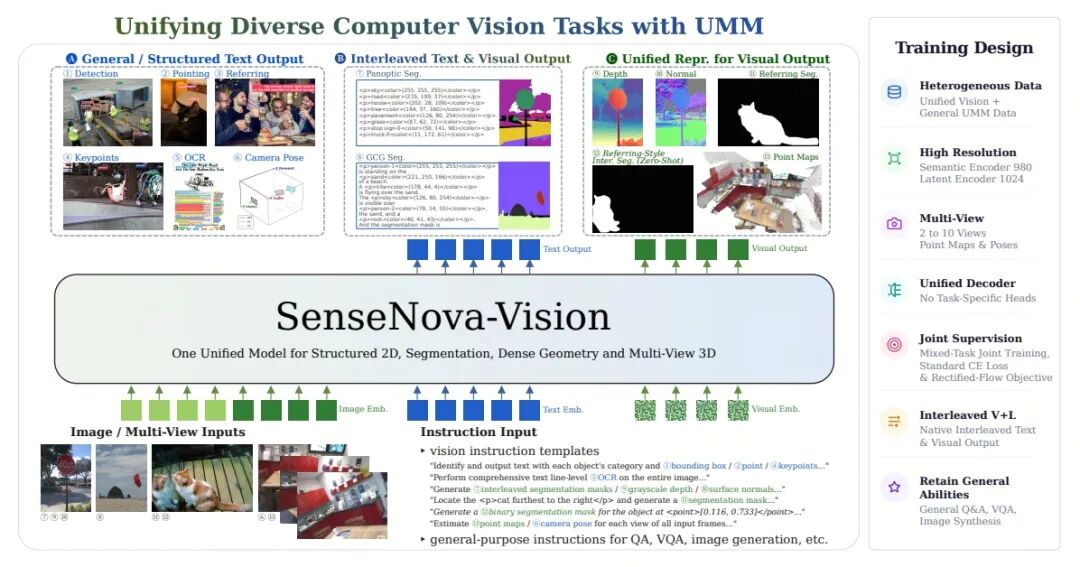
This grand-unification design changes everything:
- Cross-task knowledge sharing — 1+1>2. Joint training activates the inherent complementarity between tasks: depth knowledge strengthens spatial understanding in semantic segmentation; segmentation helps boundary judgment in detection. The result is abstract reasoning ability that single-task models cannot reach, calmly handling unseen tasks and scenes.
- From “tool executor” to “general understander.” The unified paradigm redefines visual intelligence: no longer a tool executing fixed instructions, but a foundational multimodal base with general, deep cognition of the visual world.
The release validates the enormous potential of the “unified multimodal generation” route. It dramatically lowers the barrier for vision AI applications: developers no longer maintain separate model stacks per task — a single model covers high-frequency vision needs, shortening R&D cycles and cutting deployment costs, especially for complex-image and open-scene development.
SenseTime also open-sourced SenseNova-Vision Corpus-50M, a visual instruction corpus of 50 million high-quality samples, injecting fresh momentum into the global AI ecosystem. Going forward, SenseTime will integrate SenseNova-Vision’s core technology into its SenseNova U-series models, pushing toward unified multimodal foundation models — and ultimately AGI and world models that can perceive, reason about, and interact with the physical world.